Beyond vibe coding: governed agent delivery that is verifiable
For builders and technical managers who need to specify, orchestrate agents, validate with quality gates, and operate software in production — not just generate code faster.
12 weeks · 2 tracks (Builders + Technical Managers) · Mandatory brownfield project
Devs use AI — but committing to output is common
The problem is not adopting tools. It is specifying, supervising, verifying, and operating safely — especially in brownfield code.
Vibe coding
Fast generation without specs, gates, or compliance evidence.
Brownfield ignored
Real projects require context, ADRs, tests, and observability — not isolated demos.
No rollout
Individual productivity does not become organizational capability without governance and operating model.
Alan Dantas — AI Systems Architect
Technical coordination of EBAC Business applied AI training ecosystem.
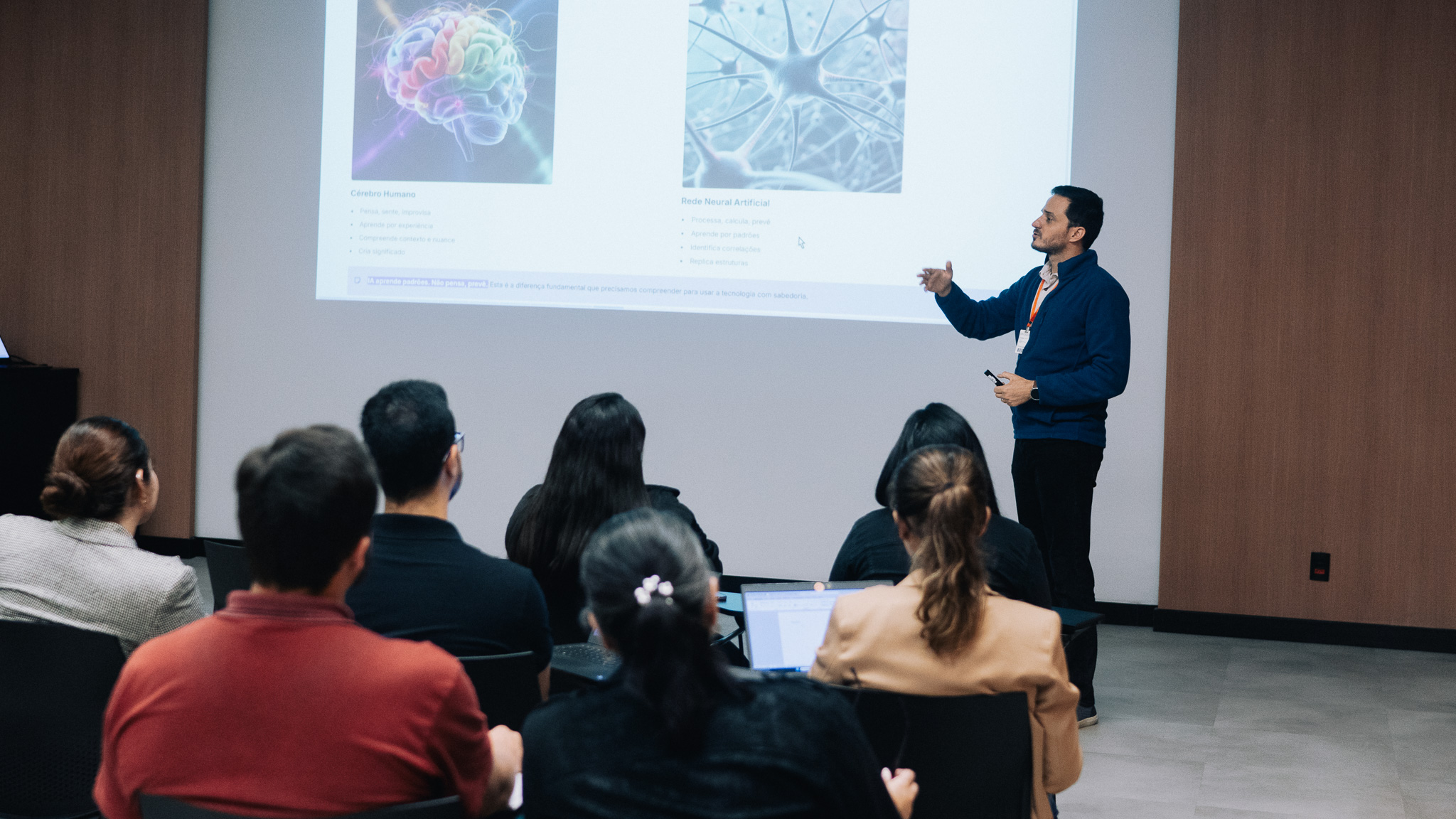
Alan Dantas works at the intersection of software architecture, applied AI, and delivery governance — leading EBAC Business executive programs and practical labs.
In HIC AI-Native Delivery, the emphasis is on executable artifacts (PRD, specs, ADRs), agent orchestration, quality gates, and observability — not isolated prompts.
The program ends with Demo Day featuring an auditable pilot and 30-60-90 roadmap, preparing squads for organizational rollout.
Does not promise full team replacement. Human supervision, secret security, and supply chain are explicitly addressed in each module.
EBAC operates inside companies
160K+ trained alumni give us a unique point of view: we know which skills the market is demanding right now — and where most teams are getting AI wrong.
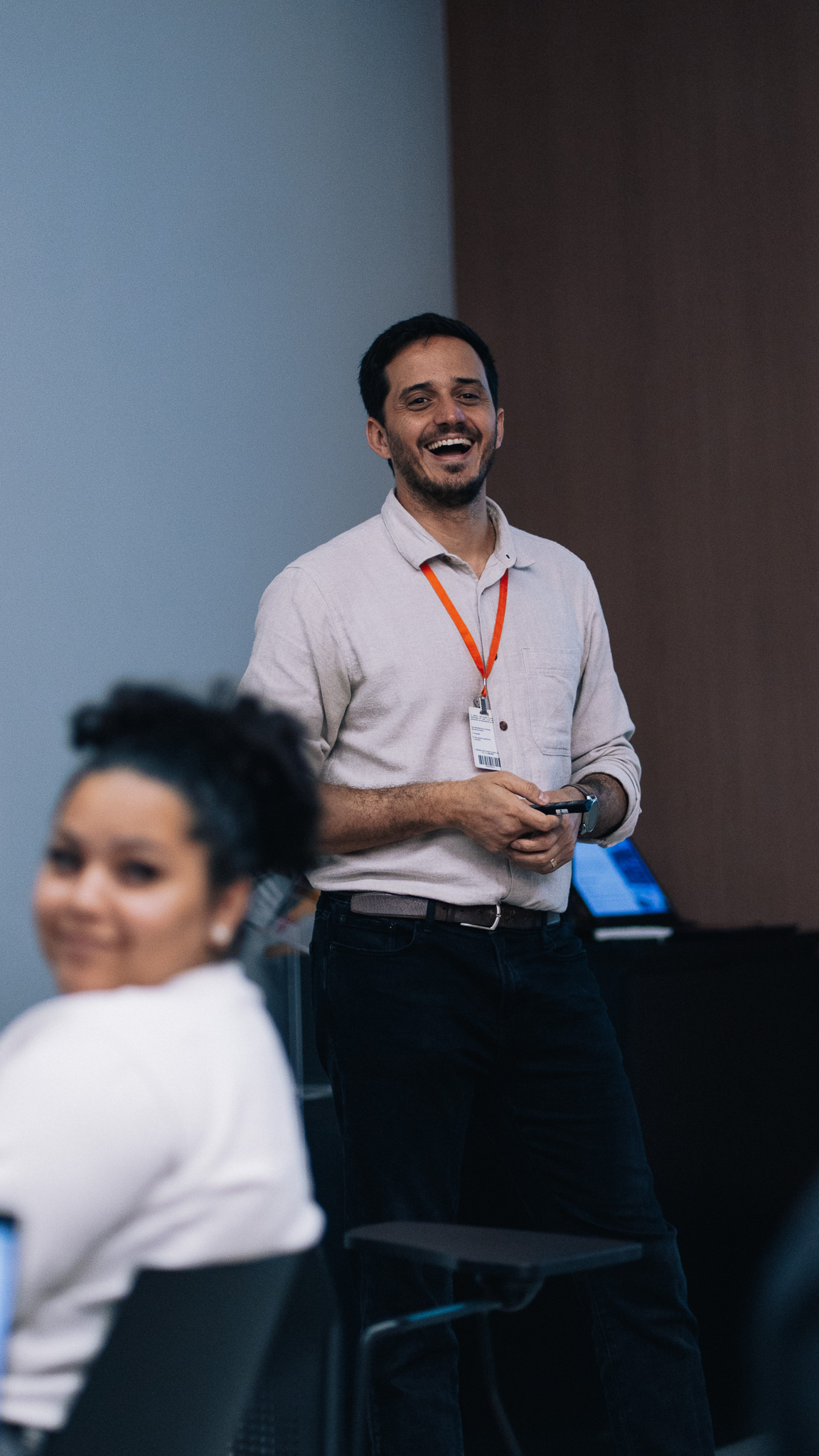 Executive application
AI as a leadership and decision topic, not just a technical tool.
 Team in the field
Hands-on workshops with professionals from leading companies.
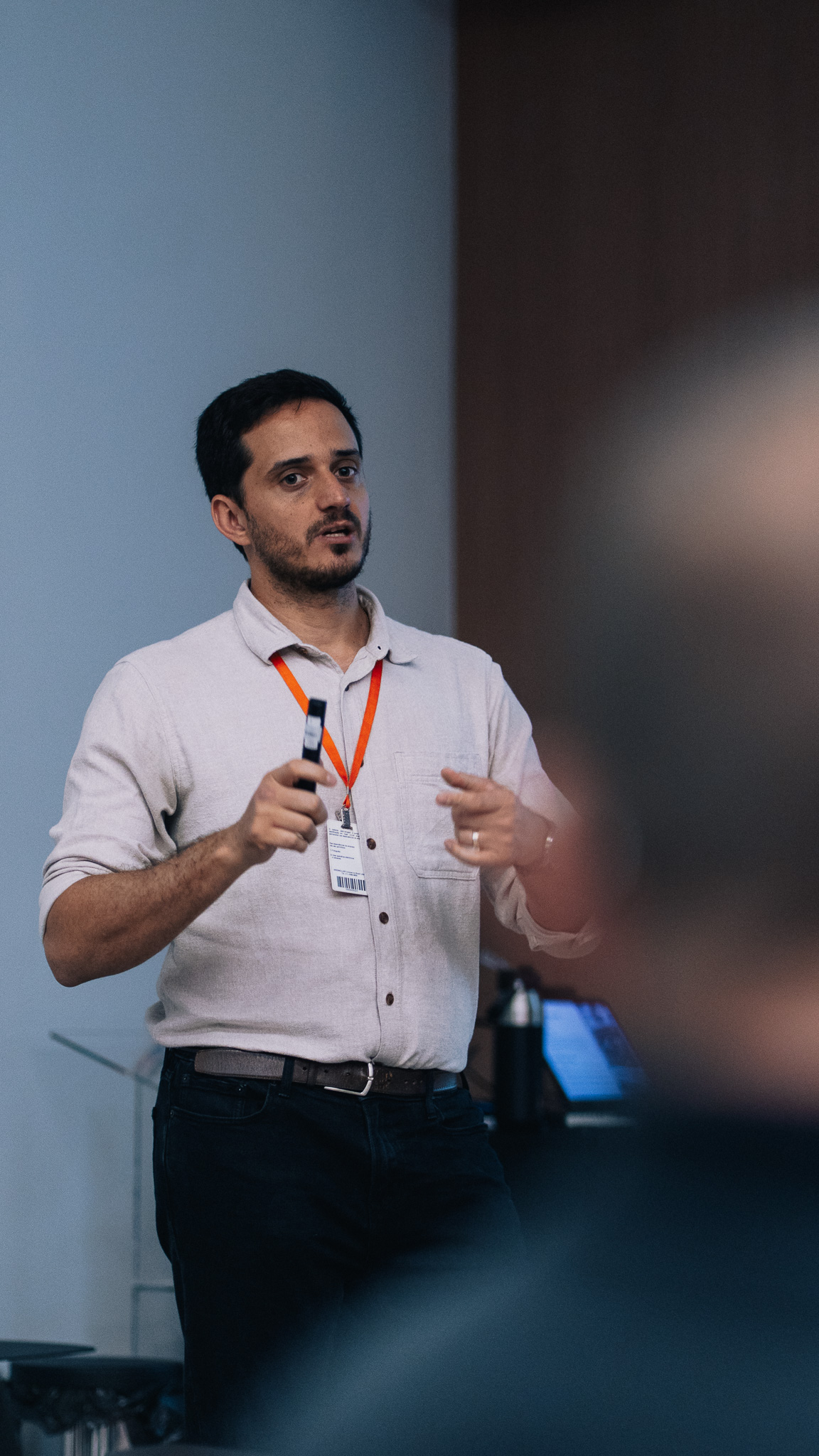 Governance and culture
Building criteria, not just experimenting — from adoption to control.
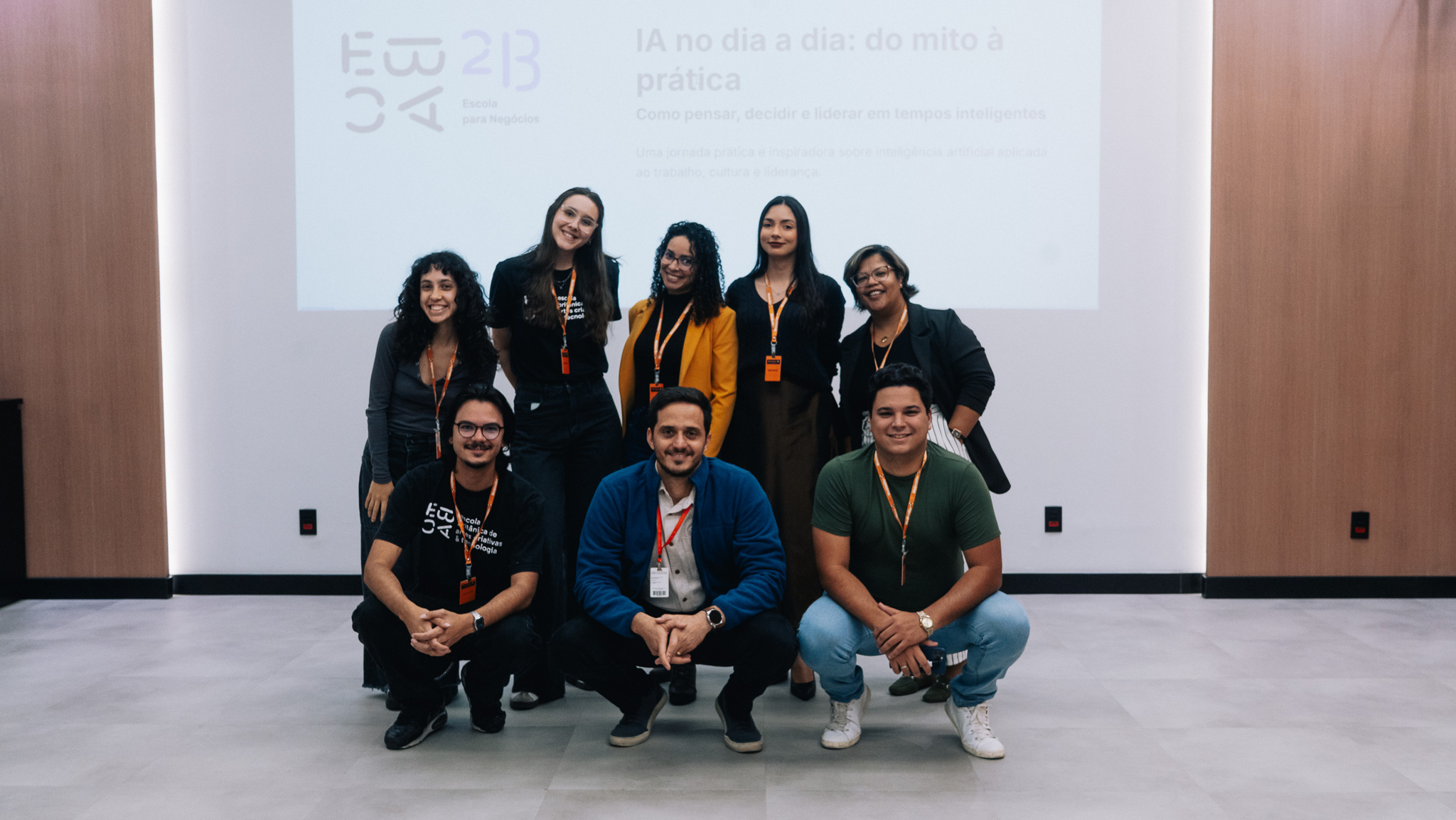 Real execution
Mixed cohorts of HR, leaders and specialists apply in practice.
HIC Delivery System — 7 Movements
Structured method in 7 steps ensuring professional judgment, verifiable evidence, and governance.
1. Frame
Turn demand into a bounded problem
2. Specify
Convert problem into executable artifacts
3. Architect
Define build and operation
4. Orchestrate
Distribute work among people, agents, and tools
5. Verify
Create compliance evidence
6. Operate
Prepare system for observation and maintenance
7. Institutionalize
Turn project into organizational capability
Core Principles
- Artifacts before tools
- The agent does not replace the process
- Brownfield projects are mandatory
- Gate-based training
- Two paths, one shared delivery
Curriculum Structure
12 weeks with practical deliverables applied to the vertical context.
Week 1
HIC and AI-native software delivery
Understand HIC in engineering: increase decision, delivery, and learning capacity of the surrounding system — not just execute faster.
Topics
- •HIC vs Senior Staff: judgment, autonomy, systemic impact
- •AI-native delivery: what it is, what it isn't
- •Workflow evolution: waterfall → CI/CD → AI-assisted
Lab
Self-diagnosis lab: where you are today and gaps to HIC.
Validation criteria
- Map identifies current and target capabilities (gap analysis)
- Allocates 90 days of focus on critical skills
- Defines objective progress measurements
Week 2
Problem, outcome, and project constitution
Structure problem and outcome before writing code, using AI for specification and alignment.
Topics
- •Problem framing: context, stakeholders, trade-offs
- •Outcome definition: OKRs, success criteria, non-goals
- •Project constitution: working agreement, principles, guardrails
Lab
Project charter drafting workshop with AI assistance and human review.
Validation criteria
- Charter defines problem, outcome, non-goals, and risks
- Stakeholders listed with responsibility
- Working agreement explicit and accepted by squad
Week 3
Context engineering
Build and maintain rich context for LLMs: context architecture, sourcing, and noise management.
Topics
- •Context components: codebase, docs, tickets, Slack
- •Sourcing strategies: filtering, deduplication, freshness
- •Noise management: irrelevance, staleness, contradiction
Lab
Context architecture implementation lab for a real project.
Validation criteria
- Architecture defines sources, processing, and storage
- Quality metrics: precision, recall, latency
- Continuous update workflow (freshness)
Week 4
PRD and feature specifications
Use AI to specify features: functional PRDs, technical specs, and test cases.
Topics
- •Clear specification principles: what, not how
- •AI to generate PRD + technical specs from requirements
- •Human review: check clarity, consistency, completeness
Lab
Specification sprint workshop with AI and peer review.
Validation criteria
- PRD covers problem, stakeholders, requirements, non-requirements
- Technical spec defines API, data contract, invariants
- Test cases explicitly derived from specs
Week 5
Architecture and decomposition
Decompose feature into modular architecture: ADRs, technical backlog, and service contracts.
Topics
- •ADR (Architecture Decision Records): format and best practices
- •Functional vs technical decomposition
- •Service contracts: API, events, shared nothing
Lab
Architecture and decomposition workshop with AI assistance.
Validation criteria
- ADRs document decisions, alternatives, and trade-offs
- Technical backlog is granular and estimable
- Explicit contracts between services (API, events)
Week 6
Coding agents and orchestration
Orchestrate AI coding agents: workflow, tools, and IDE integration.
Topics
- •Coding agent types: autocomplete, refactoring, testing, review
- •Orchestration: coordinate multiple agents in workflow
- •IDE integration: VS Code, plugins, workflow
Lab
Agent workflow implementation workshop for a real feature.
Validation criteria
- Workflow defines input, output, and success criteria
- Agents have clear roles and explicit handoffs
- Rollback mechanisms and human review
Week 7
Brownfield and reverse engineering
Use AI to understand and refactor legacy code: comprehension, refactoring, tests.
Topics
- •Reverse engineering: understand existing code architecture
- •AI for refactoring: patterns, smells, improvement suggestions
- •Test generation: unit, integration, E2E for brownfield
Lab
Reverse engineering and refactoring lab on a real module.
Validation criteria
- Legacy architecture documented (components, dependencies, flows)
- Refactors applied with passing tests
- Technical debt listed and prioritized
Week 8
Integrations, APIs, MCP, RAG
Use AI to implement integrations: APIs, MCP, RAG, and third parties.
Topics
- •API design: REST, GraphQL, versioning, documentation
- •MCP (Model Context Protocol): connect agents to tools
- •RAG (Retrieval-Augmented Generation) for knowledge bases
Lab
Functional integration implementation workshop with RAG.
Validation criteria
- Integration has clear, documented API contract
- RAG returns relevant results with minimized false positives
- Error handling and fallbacks defined
Week 9
Tests, evals, security
Use AI to generate and maintain tests, quality evals, and security checks.
Topics
- •Test generation: unit, integration, E2E, quality evals
- •AI for code review: security, best practices, smells
- •Security scanning: SAST, SCA, dependency checks
Lab
Quality gates workshop with AI and human review.
Validation criteria
- Quality gates cover tests, coverage, security, performance
- Evals measure functional quality, not syntax
- Code review focuses on risk and value, not style
Week 10
CI/CD, staging, observability
Automate CI/CD with AI: pipelines, staging, dashboards, and alerts.
Topics
- •CI/CD: tests, build, deploy, automatic rollback
- •Staging: E2E integration tests in isomorphic environment
- •Observability: logs, metrics, traces, dashboards
Lab
Pipeline and observability dashboard implementation workshop.
Validation criteria
- Pipeline is idempotent and automatically reverts errors
- Staging has E2E smokes for critical paths
- Dashboard shows SLO, SLI metrics and alerts
Week 11
Technical management, costs, governance
Manage AI-native projects: costs, quality, technical decisions, and roadmap.
Topics
- •AI costs: tokens, inference, storage, infrastructure
- •Quality management: code review, ADRs, technical debt
- •Technical governance: processes, tools, metrics
Lab
Operating model creation workshop for a real project.
Validation criteria
- Operating model defines roles, processes, and tools
- Costs estimated with contingencies
- Governance defines who decides what and when
Week 12
Demo Day and adoption plan
Deliver auditable demo and organizational adoption plan.
Topics
- •Demo Day: structure, content, Q&A, feedback
- •Adoption plan: training, rollout, expansion
- •30-60-90 day roadmap: learning loops and iterations
Lab
Demo preparation and rollout planning workshop.
Validation criteria
- Demo shows functional deliverables and artifacts
- Roadmap defines milestones, owners, and success criteria
- Pilot has impact measurements and expansion plan
Target Audience (2 Tracks)
Advanced program for developers, tech leads, and engineering managers to incorporate AI into the development lifecycle in a structured, secure, and governed way.
Track A — Builders
Priority Applications
- Spec coding and task decomposition
- AI-assisted architecture
- Code generation and review
- Automated tests and QA
- Security and secret protection
Track B — Technical Managers
Priority Applications
- Technical project management with AI
- Human review and acceptance criteria
- Development cycle governance
- Observability and costs
- Local model and API evaluation
Expected Outcomes
- Ability to specify instead of vibe coding
- Building with orchestrated agents
- Verification with quality gates
- Operation with observability
- Organizational rollout governance
Use Cases
- Spec coding and assisted PRD
- Architecture and decomposition
- Coding agents and orchestration
- Brownfield and reverse engineering
- Integrations, APIs, MCP, RAG
- Tests, evals, and security
- CI/CD, staging, observability
- Technical management, costs, governance
Deliverables
Individual
- •HIC diagnosis
- •Competency map
- •Development plan
- •Technical/management portfolio
Squad/Team
- •Project charter + constitution
- •PRD + feature specifications
- •ADRs + architecture
- •Functional code + tests
- •CI/CD pipeline + staging
- •Observability + costs
- •Postmortem + 30-60-90 roadmap
- •Executive demonstration
Institution
- •Capability diagnosis
- •Opportunity and risk map
- •Competency inventory
- •AI Delivery Playbook
- •Governance Starter Kit
Stack and Tools
Core (Required)
- GitHub with standardized templates
- GitHub Actions
- Branch protection and pull requests
- Constructor Studio
- Constructor SDLC Kit
- EBAC templates
- VS Code + Dev Containers
- Claude (premium model)
- GLM (fallback and cost-benefit)
Optional
- ○Cline (free alternative)
- ○Cursor (for existing users)
- ○Standardized Docker image
- ○Cloud Run (staging)
- ○OpenTelemetry + Langfuse
Labs
- GitHub template repositories
- Standardized development environments
- Orchestrated agent workflows
- Observability dashboards per squad
Differentiators vs Generic Training
HIC
- •Teaches delivery system, not just tools
- •Works context, specs, and workflows — not just prompts
- •Structures auditable pilots, not just demos
- •Evaluates artifacts and quality gates, not just attendance
- •Uses real problems, not isolated exercises
- •Ends in rollout and installed capability, not certificates
- •Treats AI as organizational infrastructure
Generic
- •Generic technical focus
- •Professional judgment not addressed
- •No evidence or controls
- •Generic or missing labs
- •Depend on paid licenses
- •No impact measurement
Request a conversation about HIC AI-Native Delivery
Fill out the form below and our team will contact you.
Corporate cohorts
Talk to our team about in-company implementation and dedicated cohorts.
Frequently Asked Questions
What is HIC and how does it differ from other AI training?
Do I need prior AI experience to participate?
Does the program include certification?
What are the practical labs like?
Still have questions? Talk to our team.
Chat on WhatsAppImportant
- •Not vibe coding — includes spec coding, architecture, tests, security, observability, and governance
- •Addresses vulnerable code, dependencies, licenses, supply chain, and secret exposure risks
- •Distinguishes individual productivity from organizational capability
- •Includes practices for technical leaders, not just prompts for programmers
- •Does not promise full team replacement or unsupervised autonomy
Ready to become an HIC?
Contact us to discuss how this program can transform your career and your organization's capabilities.