Instructional Design with AI: judgment before automation governance before scale
For teachers, coordinators, and managers who need to decide pedagogically when to use AI, structure institutional governance, and turn scattered use into organizational capability.
8 weeks · 20 synchronous hours · Corporate and individual cohorts
Teachers use AI, but institutions lack governance
Scattered tool use without professional judgment, institutional protocols, or evidence of impact — pedagogical transformation becomes risk.
Missing professional judgment
Teachers use tools without pedagogical criteria or decision protocols.
No institutional governance
No use policy, risk matrix, or data security protocol.
Unverified impact
Without learning evidence, AI becomes an isolated experiment — not educational transformation.
Alan Dantas — Managing Director, EBAC Business
Alan Dantas
Managing Director EBAC Business / Fundador Edugital
Academic coordination of HIC Education. Over ten years at the intersection of education, technology, and institutional transformation.

Managing Director of EBAC Business and founder of Edugital. Over ten years at the intersection of education, technology, and institutional transformation.
Training thousands of teachers and professionals. Creation of Instructional Design courses and methodologies.
Implementation, governance, and AI training in dozens of organizations, including EBAC.
Teaching experience at institutions such as Ibmec, EBAC, and other educational organizations, combining pedagogical theory with applied classroom practice.
- ✓1000+ teachers and managers trained in AI
- ✓30+ organizations with EBAC implementation
In-class demonstrations use simulated educational scenarios. Final pedagogical decisions remain the responsibility of teachers and institutions. Faculty and guests vary by cohort.
EBAC operates inside companies
160K+ trained alumni give us a unique point of view: we know which skills the market is demanding right now — and where most teams are getting AI wrong.
 Executive application
AI as a leadership and decision topic, not just a technical tool.
 Team in the field
Hands-on workshops with professionals from leading companies.
 Governance and culture
Building criteria, not just experimenting — from adoption to control.
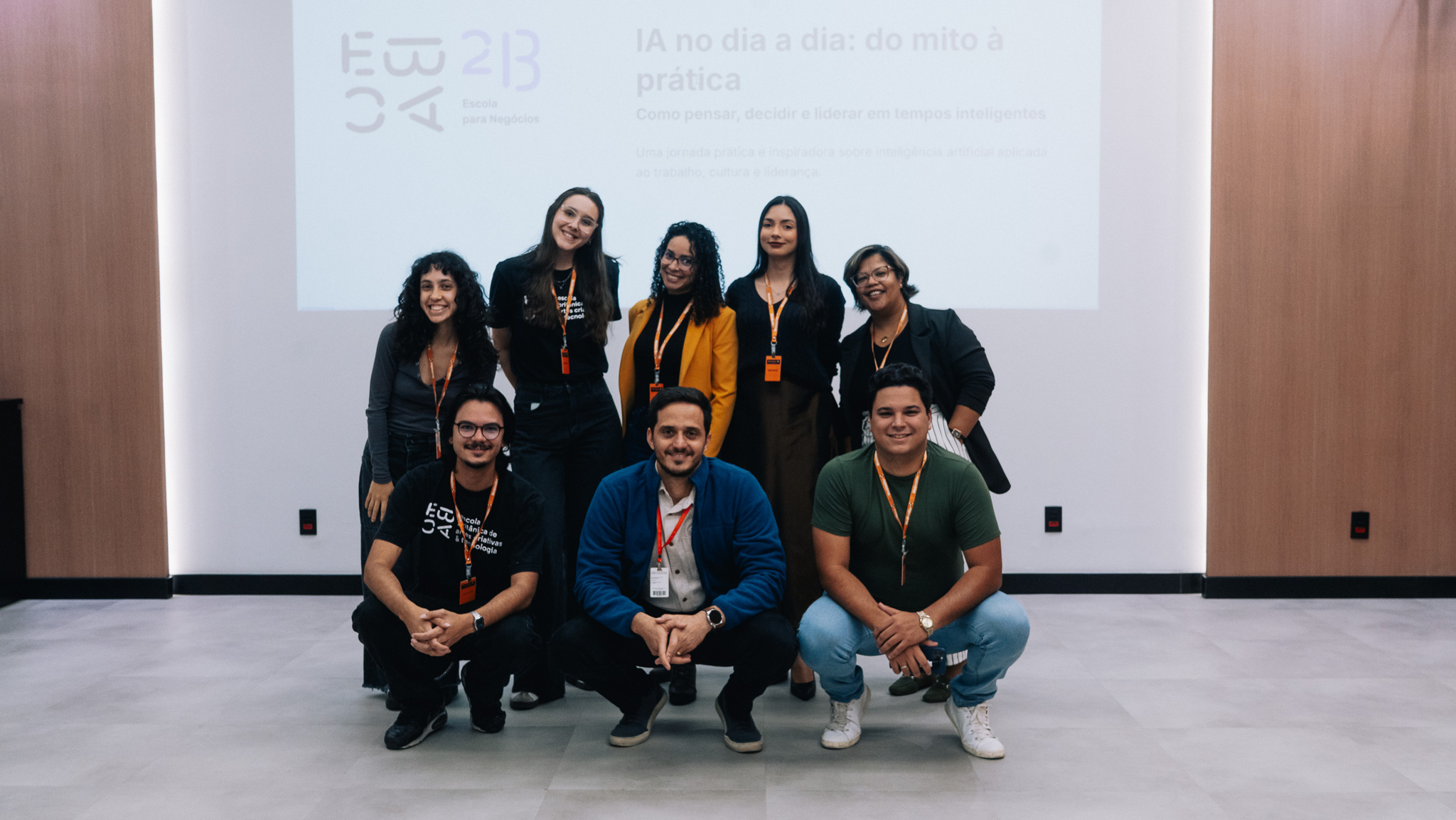 Real execution
Mixed cohorts of HR, leaders and specialists apply in practice.
HIC Education Method — 7 Steps
Structured method in 7 steps ensuring professional judgment, verifiable evidence, and governance.
1. Define intent
Clear pedagogical objective before any AI use
2. Select resources
Identify where AI adds value to the educational process
3. Protect data
Privacy, ethics, and student information security
4. Specify criteria
Quality and validation of AI-generated outputs
5. Automate
AI application with mandatory human review
6. Verify results
Pedagogical effectiveness and learning impact
7. Iterate
Continuous improvement of the pedagogical process with AI
Core Principles
- Teacher always in control
- Professional judgment preserved
- Authorship and integrity protected
- Learning evidence
- Clear use criteria
- Security protocols
- Real impact assessment
Curriculum Structure
8 weeks with practical deliverables applied to the vertical context.
Week 1
Pedagogical judgment, ethics, and criteria for use
Build professional judgment to decide when to use AI in educational settings, identifying appropriate scenarios and ethical risks.
Topics
- •Principles of professional judgment in educational contexts
- •Risk matrix for AI use in assessments and materials
- •Criteria for approving or rejecting classroom use
Lab
Case analysis lab (plagiarism, bias, privacy) with documented decision-making.
Validation criteria
- Protocol defines clear, verifiable use criteria
- Risk matrix covers critical scenarios (assessment, privacy, authorship)
- Rationale for each decision documented and traceable
Week 2
Institutional policy and AI governance
Structure institutional governance for AI use, defining policies, responsibilities, and approval flows.
Topics
- •Components of an AI use policy in education
- •Responsibilities of faculty, coordinators, and IT
- •Approval flow for new AI tools
Lab
Institutional policy drafting workshop with templates and peer review.
Validation criteria
- Policy includes objectives, scope, responsibilities, prohibitions, procedures
- Approval flow is clear and operational
- Explicit prohibitions for unethical or illegal use
Week 3
Planning and Instructional Design
Apply AI to unit and sequence planning, focusing on learning objectives and personalization.
Topics
- •Instructional planning models (ADDIE, Backward Design)
- •AI as a brainstorming and material adaptation tool
- •Assessment design with AI: criteria and validation
Lab
Full unit design lab using AI for planning, with human review.
Validation criteria
- Plan defines objectives, activities, assessment, and resources
- AI-supported activities are pedagogically justified
- Plan passes human review with quality criteria
Week 4
Content and audiovisual production
Use AI to create accessible audiovisual content, respecting legislation and universal design best practices.
Topics
- •AI for video scripts and storyboards
- •Caption and audio description generation with AI
- •Video accessibility: WCAG and Brazilian legislation
Lab
Accessible short video production workshop using AI for script, generation, and accessibility.
Validation criteria
- Video has captions and audio description
- Captions meet timing and synchronization requirements
- Material meets WCAG 2.1 AA
Week 5
Assessment, feedback, and validation
Implement assessment and feedback systems with AI, ensuring integrity and confirmed authorization of use.
Topics
- •AI for automated grading and feedback
- •Validation of AI-generated responses
- •Confirmation protocol with learners
Lab
Assessment system implementation lab with AI and confirmation protocol.
Validation criteria
- System allows human review of automated grading
- Confirmation protocol ensures explicit learner authorization
- System records grading and review history
Week 6
Safe automations for educational work
Automate repetitive tasks with AI while maintaining human review and quality criteria.
Topics
- •Automation of objective exercise grading
- •Progress report generation with AI
- •Criteria for human intervention in automations
Lab
Automation implementation workshop with human review for grading and reports.
Validation criteria
- Automation exposes results for review before use
- Review criteria explicit and documented
- Error and correction log for continuous improvement
Week 7
Data, personalization, and learning evidence
Use learning data to personalize teaching and generate impact evidence, with privacy protection.
Topics
- •Types of learning data (clicks, time, assessment)
- •Personalization with AI: limits and opportunities
- •Learning evidence: metrics and visualizations
Lab
Data analysis lab and evidence dashboard creation with anonymization.
Validation criteria
- Dashboard uses anonymized or aggregated data
- Metrics are relevant and actionable
- Evidence can justify AI investments
Week 8
Applied project, multiplier training, and 90-day plan
Deliver an applied project, train multipliers, and plan institutional implementation in 90 days.
Topics
- •Applied project structure
- •Multiplier training: internal workshop design
- •90-day plan: implementation, training, and validation
Lab
Applied project design workshop + peer training kit.
Validation criteria
- Applied project has defined scope and success criteria
- Training kit includes materials and scripts
- 90-day plan defines milestones, owners, and metrics
Target Audience
Executive program for teachers, coordinators, and managers who need to structure AI use with professional judgment, institutional governance, and validated implementation — not just tool usage.
University Professors
Needs
- •Stay relevant in an AI context
- •Efficiency in material production
- •Personalized teaching
- •Learning data analysis
Priority Applications
- Lesson planning
- Adaptive assessments
- Personalized feedback
- Difficulty analysis
High School Teachers
Needs
- •Engage digital-native students
- •Prepare for national exams and college entrance
- •Run interdisciplinary projects
- •Innovate methodologies
Priority Applications
- Exam simulations
- Automated essay grading
- Performance analysis
- Research projects
Coordinators and Managers
Needs
- •AI use governance
- •Institutional protocols
- •Quality assessment
- •Faculty development
Priority Applications
- Use policies
- Impact assessment
- Maturity diagnosis
- Training plans
Corporate Trainers
Needs
- •Scale training programs
- •Personalize content
- •Automate assessments
- •Measure transfer
Priority Applications
- Adaptive learning paths
- Corporate simulations
- Feedback at scale
- Impact reports
Expected Outcomes
- Teachers able to decide pedagogically when to use AI
- Reduced time on repetitive tasks
- Personalized learning at scale
- Institutional protocol development
- Measurement of real impact on learning outcomes
Use Cases
- Lesson planning with AI support
- Adaptive assessment creation
- Personalized feedback at scale
- Performance data analysis
- Instructional material development
- Security and privacy protocols
- Institutional use policies
Deliverables
Individual
- •AI use policy
- •Decision and risk matrix
- •Validated unit plan
- •Accessible audiovisual kit
- •Assessment system with confirmation protocol
- •Automation with human review
- •Minimum evidence dashboard
- •Peer training kit
- •90-day institutional implementation plan
Squad/Team
- •Institutional use policies
- •Use case catalog
- •Planning templates
- •Governance framework
- •Institutional risk matrix
Institution
- •Organizational diagnosis
- •Faculty development plan
- •Security and privacy protocols
- •Educational impact report
- •Institutional implementation roadmap
Stack and Tools
Core (Required)
- ChatGPT or Claude (EBAC access)
- Planning templates
- Metrics dashboards
- Labs with educational data
Optional
- ○Institution-specific tools
- ○LMS with integrated AI
- ○Videoconferencing platforms
- ○NotebookLM (material synthesis and exploration)
- ○AI for presentations (Gamma, Canva AI, and similar)
- ○AI video tools (scripts, generation, captions)
- ○Audio and TTS (narration, educational podcast)
Labs
- Classroom scenarios
- Cases across disciplines
- Assessment simulations
- Synthetic learning data
- Audiovisual labs: presentations, short video, and accessible audio
Differentiators vs Generic Training
HIC
- •Pedagogical focus, not just technical
- •Professional judgment preserved
- •Ethical and privacy protocols
- •Labs with real scenarios
- •Ready-to-use templates
- •Independence from paid licenses
- •Educational impact assessment
Generic
- •Generic technical focus
- •Professional judgment not addressed
- •No evidence or controls
- •Generic or missing labs
- •Depend on paid licenses
- •No impact measurement
Request a conversation about HIC Education
Fill out the form below and our team will contact you.
Corporate cohorts
Talk to our team about in-company implementation and dedicated cohorts.
Frequently Asked Questions
What is HIC and how does it differ from other AI training?
Do I need prior AI experience to participate?
Does the program include certification?
What are the practical labs like?
Still have questions? Talk to our team.
Chat on WhatsAppImportant
- •Does not replace teachers — educators remain responsible for pedagogical decisions
- •Bias, privacy, authorship, assessment, and academic integrity are explicitly addressed
- •Institutional applicability, not prompt engineering alone
- •Avoid claims about learning without evidence
- •Educational demonstration ≠ substitute pedagogical recommendation
Ready to become an HIC?
Contact us to discuss how this program can transform your career and your organization's capabilities.