Financial AI with human judgment and audit trail
For CFOs, controllers, and finance teams who need to turn informal AI use into organizational capability — with controls, evidence, and verifiable value metrics.
9 weeks · Labs with synthetic data · Mandatory human validation
ChatGPT in finance without control is operational risk
Teams already use AI informally. The gap is not tools — it is governance, evidence, and professional judgment in critical processes.
Informal use
Spreadsheets and reports generated without audit trail or validation criteria.
Sensitive data
Confidentiality, access segregation, and compliance require explicit protocols.
Unmeasured impact
Without before/after metrics, automation becomes hidden cost — not capability gain.
Program designed for real financial processes
EBAC Business methodology focused on controls, audit, and deliverables applicable to FP&A and controllership.

HIC Finance structures each use case around process identification, rule documentation, data protection, and human verification before any automation.
Labs use synthetic or sanitized data to simulate closing, forecasting, reporting, and scenario analysis — without exposing confidential information.
EBAC Business trains executives and technical teams in applied AI with auditable deliverables, not isolated demos.
This program does not replace audit, accounting, legal, or fiduciary decisions. Human validation and professional responsibility are mandatory.
EBAC operates inside companies
160K+ trained alumni give us a unique point of view: we know which skills the market is demanding right now — and where most teams are getting AI wrong.
 Executive application
AI as a leadership and decision topic, not just a technical tool.
 Team in the field
Hands-on workshops with professionals from leading companies.
 Governance and culture
Building criteria, not just experimenting — from adoption to control.
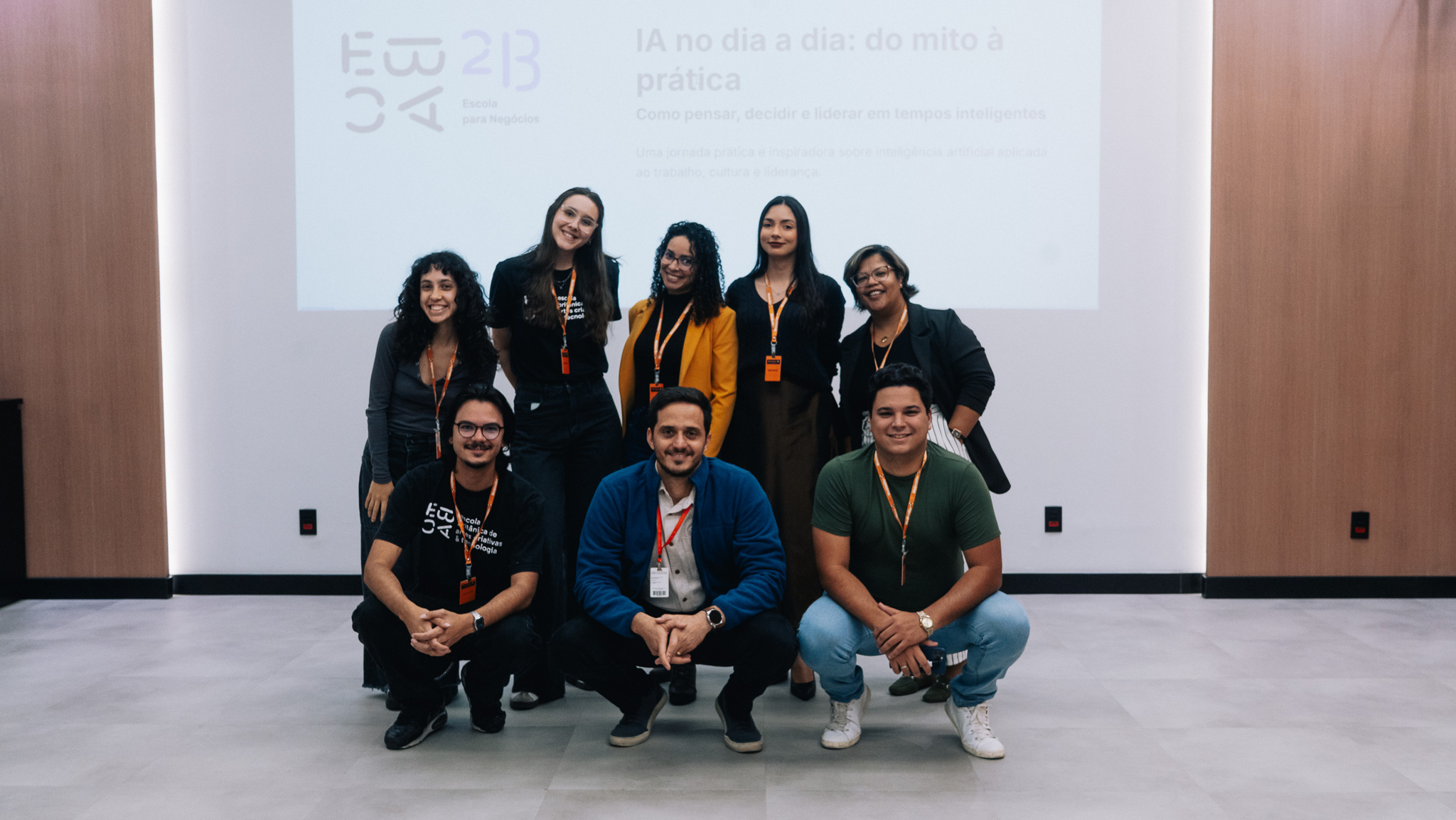 Real execution
Mixed cohorts of HR, leaders and specialists apply in practice.
HIC Finance Method — 7 Steps
Structured method in 7 steps ensuring professional judgment, verifiable evidence, and governance.
1. Identify
Process candidate for automation
2. Document
Current rules and controls
3. Map
Where AI adds value
4. Protect
Sensitive data and secrets
5. Specify
Inputs, outputs, and quality criteria
6. Automate
Application with mandatory human verification
7. Measure
Before, after, and continuous impact metrics
Core Principles
- Human judgment remains
- Uninterrupted audit trails
- Validation evidence
- Independent controls
- Financial value metrics
Curriculum Structure
9 weeks with practical deliverables applied to the vertical context.
Week 1
Financial AI Fundamentals
Understand core AI capabilities in financial contexts (forecasting, risk, compliance) and identify limits.
Topics
- •ML models used in FP&A (regression, time series)
- •Limitations and bias in financial data
- •GDPR, LGPD, and financial data regulations
Lab
Financial AI maturity diagnosis lab with gap analysis.
Validation criteria
- Diagnosis covers people, processes, data, and technology
- Identifies opportunities and risks specific to finance context
- Defines 30-60-90 day capability roadmap
Week 2
Forecasting and Budgeting
Use AI for financial forecasting and budgeting, ensuring interpretability and governance.
Topics
- •Time series techniques with AI (ARIMA, LSTM, transformers)
- •Forecast interpretation: confidence intervals, drivers
- •Governance: manual approval for critical forecasts
Lab
Forecast model implementation workshop with human validation.
Validation criteria
- Model has interpretability (feature importance, SHAP)
- Confidence intervals exposed and explained
- Manual approval workflow for outliers
Week 3
Executive Reporting
Automate executive reporting with AI while maintaining data integrity and narrative context.
Topics
- •AI for narrative generation in reports (MD&A, earnings)
- •Data integrity: hallucination prevention and cross-validation
- •Executive dashboard design with AI assistance
Lab
Automated dashboard implementation lab with validation.
Validation criteria
- Dashboard uses primary data sources
- Cross-validation with accounting systems (ERP)
- Alerts for anomalies or inconsistent data
Week 4
Scenario Analysis
Use AI for scenario analysis (stress testing, sensitivity) in FP&A and strategy.
Topics
- •AI for macro and sector scenario generation
- •Sensitivity analysis: impact of critical drivers
- •Results communication: visualizations and insights
Lab
Multi-variable scenario generator implementation workshop.
Validation criteria
- Scenarios cover macro, sector, and internal drivers
- Sensitivity explains impact of each driver
- Visualizations are clear and actionable
Week 5
Risk Management and Compliance
Use AI to identify and mitigate financial risks, focusing on compliance and audit.
Topics
- •AI for anomaly detection (fraud, error, leakage)
- •Risk matrices: probability × impact × mitigation
- •Compliance: documentation and decision traceability
Lab
Risk matrix implementation lab with AI assistance.
Validation criteria
- Matrices classify risks with clear criteria
- AI provides real-time alerts for anomalies
- Mitigation decisions are traceable and auditable
Week 6
Audit and Validation
Implement audit of financial AI models, ensuring regulatory compliance.
Topics
- •Regulations: Basel, BIS, local rules
- •Model governance: documentation, tests, validation
- •Continuous verification protocols (monitoring, drift)
Lab
Verification protocol creation workshop for production models.
Validation criteria
- Protocols cover data drift, model drift, performance degradation
- Validation tests documented and reproducible
- Workflow for periodic human review
Week 7
Process Automation
Automate repetitive financial processes with AI while maintaining control and quality.
Topics
- •AI for bank and accounting reconciliation
- •Automation of periodic reports (daily, weekly, monthly)
- •Integrations: ERP, accounting systems, banks
Lab
Automation workflow implementation workshop with validation.
Validation criteria
- Workflow has human review at critical points
- Integrations tested with real systems
- Complete logs and traceability
Week 8
Document Intelligence
Use AI to extract and process financial documents (contracts, invoices, reports).
Topics
- •OCR and NLP for structured and unstructured documents
- •Key field extraction (amount, tax ID, date, tax)
- •Validation: format checks, checksum, and consistency
Lab
Extraction system implementation lab with validation.
Validation criteria
- Extraction accuracy > 95% on typical documents
- Validation detects invalid or suspicious documents
- Manual review workflow for low-confidence cases
Week 9
Final Project and Implementation
Deliver a 90-day pilot applying learnings to a real financial process.
Topics
- •Financial process selection for pilot
- •KPI and success metric definition
- •Implementation plan: training, rollout, expansion
Lab
Complete pilot design workshop with 90-day roadmap.
Validation criteria
- Pilot has defined scope and success measurements
- Training roadmap for users and managers
- Expansion plan for other processes after validation
Target Audience
Executive program for CFOs, controllers, and accountants to incorporate AI into processes while maintaining human judgment, controls, evidence, and financial value metrics.
CFOs and Finance Directors
Needs
- •Define investment priorities
- •Govern AI risks
- •Understand strategic impact
- •Structure use case portfolio
- •Communicate transformation to the board
Priority Applications
- Use case portfolio
- Executive reporting
- ROI assessment
- AI governance
- Finance operating model
Controllers and FP&A
Needs
- •Reduce consolidation time
- •Improve variance analysis
- •Enhance forecast and scenarios
- •Generate consistent management narratives
- •Increase analytical capacity
Priority Applications
- Accounting close
- Actual vs budget comparison
- Multi-scenario forecasting
- Sensitivity analysis
- Management reporting
Accounting and Financial Administration
Needs
- •Automate repetitive tasks
- •Focus on high-value analysis
- •Improve report consistency
- •Reduce manual errors
- •Gain time for planning
Priority Applications
- Bank reconciliation
- Accounting reconciliation
- Cost analysis
- Departmental budgets
- Cash flow forecasting
Expected Outcomes
- Transformation of scattered use into organizational capability
- Controls and evidence in financial processes
- Human judgment preserved
- Reduced time on repetitive tasks
- Before/after/continuous financial value metrics
Use Cases
- Automated accounting close
- Multi-scenario forecasting
- Automated executive reporting
- Variance analysis at scale
- Risk management and compliance
- Audit with human validation
- Document intelligence (OCR + extraction)
- Scenario analysis
Deliverables
Individual
- •AI maturity diagnosis
- •Candidate process map
- •3 automation prototypes
- •Personal governance protocol
- •90-day implementation plan
Squad/Team
- •Financial automation playbook
- •Prioritized use case catalog
- •Dashboard templates
- •Data security protocols
- •Risk and mitigation matrix
Institution
- •Organizational diagnosis
- •Prioritized pilot portfolio
- •Governance Starter Kit
- •Potential impact report
- •30-60-90 implementation roadmap
Stack and Tools
Core (Required)
- ChatGPT or Claude (EBAC access)
- Spreadsheets with templates
- Configured dashboards
- Labs with synthetic data
Optional
- ○Microsoft Copilot for Finance
- ○Specific BI solutions
- ○Enterprise ERP
Labs
- Synthetic or sanitized data
- Varied industry cases
- Increasing complexity scenarios
Differentiators vs Generic Training
HIC
- •Focus on real financial processes
- •Human judgment preserved
- •Integrated controls and audit
- •Labs with synthetic data
- •Ready-to-use templates
- •Independence from paid licenses
Generic
- •Generic technical focus
- •Professional judgment not addressed
- •No evidence or controls
- •Generic or missing labs
- •Depend on paid licenses
- •No impact measurement
Request a conversation about HIC Finance
Fill out the form below and our team will contact you.
Corporate cohorts
Talk to our team about in-company implementation and dedicated cohorts.
Frequently Asked Questions
What is HIC and how does it differ from other AI training?
Do I need prior AI experience to participate?
Does the program include certification?
What are the practical labs like?
Still have questions? Talk to our team.
Chat on WhatsAppImportant
- •Does not replace audit, accounting, legal, or fiduciary decisions
- •Human validation and professional responsibility are mandatory
- •Address confidentiality, access segregation, and corporate data use
- •Distinguish educational demonstration from financial recommendation
- •Avoid cost reduction or return promises without evidence
- •Connect use cases to internal controls and governance
Ready to become an HIC?
Contact us to discuss how this program can transform your career and your organization's capabilities.