Bring a real government problem. Build an applicable solution.
Applied program for public managers, civil servants, and multidisciplinary teams who want to learn AI by solving a real institutional challenge — from prompting and harnesses to automation, data, agents, reporting, and implementation.
The problem becomes the project: you learn what you need, build, test, and leave with evidence and an implementation path.
8 weeks · 24h live · real project + specialist mentorship
In the EBAC method, HIC means Human in Control: AI amplifies execution capacity, but judgment, validation, evidence, and accountability remain with people.
Problem before tool
Person in control
Evidence before scale
Capability that stays in the institution
Government does not need another class about tools. It needs to solve real problems.
Public teams have very different maturity levels and challenges that span technology, data, processes, management, and policy. The program starts from the problem and builds the journey needed to take it from a hypothesis to a tested and implementable solution.
Complex, cross-cutting problems
Government challenges span technology, data, processes, management, and policy — rarely solved with a single AI model.
Risk, compliance, and human control
In the public sector, errors are costly: decisions require evidence, traceability, and human oversight at every step.
Uneven maturity across teams
Civil servants and managers arrive with different levels of preparation. The program advances from the problem, not from a uniform technical prerequisite.
HIC Government Method — from problem to implementation
A single real problem runs through all 8 weeks. At each step, you learn only what is needed to advance that problem — framing, building, testing, controlling risks, and preparing implementation.
Frame
Problem, users, baseline, constraints, and public value.
Learn what is needed
Prompting, harness, research, data, automation, or agents — depending on the challenge.
Build
Turn knowledge into an artifact, workflow, prototype, or proposal.
Verify and control
Quality, evidence, risk, security, and human review.
Implement and transfer capability
Reusable assets, owners, indicators, and a 30-60-90 plan.
Core Principles
- Start from the problem, never from the tool
- Human control and evidence at every stage
- Sensitive data always sanitized
- One real problem as the cumulative project
- Focus on implementation, not just prototype
Which problem do you want to solve?
These are examples, not limits. Bring your institution's problem and together we define the combination of learning, mentorship, and building it requires.
Automation and efficiency
- administrative routines
- triage and classification
- document analysis
- information consolidation
Data, reporting, and decisions
- dashboards
- executive reports
- monitoring
- indicators
- synthesis of scattered data
Citizen services
- service desks
- information search
- backlog reduction
- journey redesign
Public notices and funding
- opportunity identification
- reading and compliance
- project structuring
- documentation
- indicators and budget
Procurement, contracts, and management
- specifications
- contract monitoring
- workflows
- knowledge management
Policies and programs
- monitoring and evaluation
- execution tracking
- research and evidence
- initiative portfolio management
Is your problem not on the list? Bring it anyway.
Your level defines the depth, not whether you can participate
The journey accommodates different starting points. Everyone advances the same real problem; what changes is the technical depth of each step.
Starting
- prompting
- critical thinking
- research
- documents
- harnesses and simple workflows
Applying
- data
- reports
- workflows
- automations
Building
- agents
- APIs
- RAG
- integrations
- evaluations
- prototypes
Institutionalizing
- governance
- documentation
- indicators
- transfer
- implementation
The entry point changes. The expectation of progress does not.
Alan Dantas + invited specialists per challenge
Alan Dantas
Managing Director, EBAC Business · Founder, Edugital
Academic coordination of HIC Government, connecting applied AI, solution design, education, and institutional transformation.

Alan Dantas leads EBAC Business and works at the intersection of applied AI, education, product, and institutional transformation. In HIC Government, he coordinates the methodology and the evolution of the real projects brought by participants.
Depending on the problem, the journey brings in invited specialists in areas such as data, automation, agents, product, implementation, instructional design, and other domains the project requires.
The program does not replace legal, procurement, or information security advice.
Specialists vary by cohort and the challenges brought in. The goal is to connect each project with the competencies it actually demands.
Method applied in the field
Records of EBAC Business applied workshops and programs. The images demonstrate the hands-on learning method; they do not necessarily represent government projects.
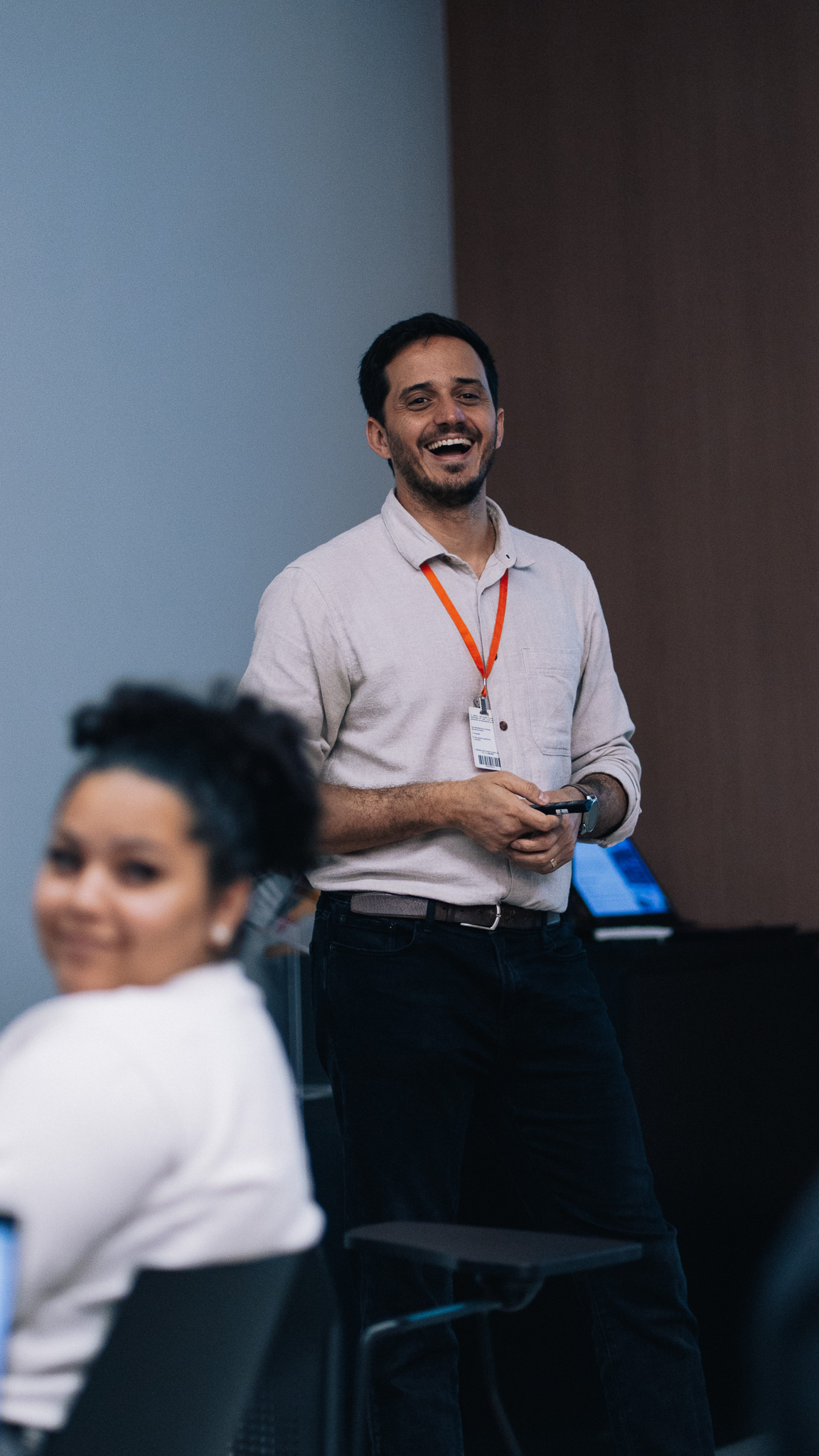 Executive workshop
Hands-on AI application in an executive context.
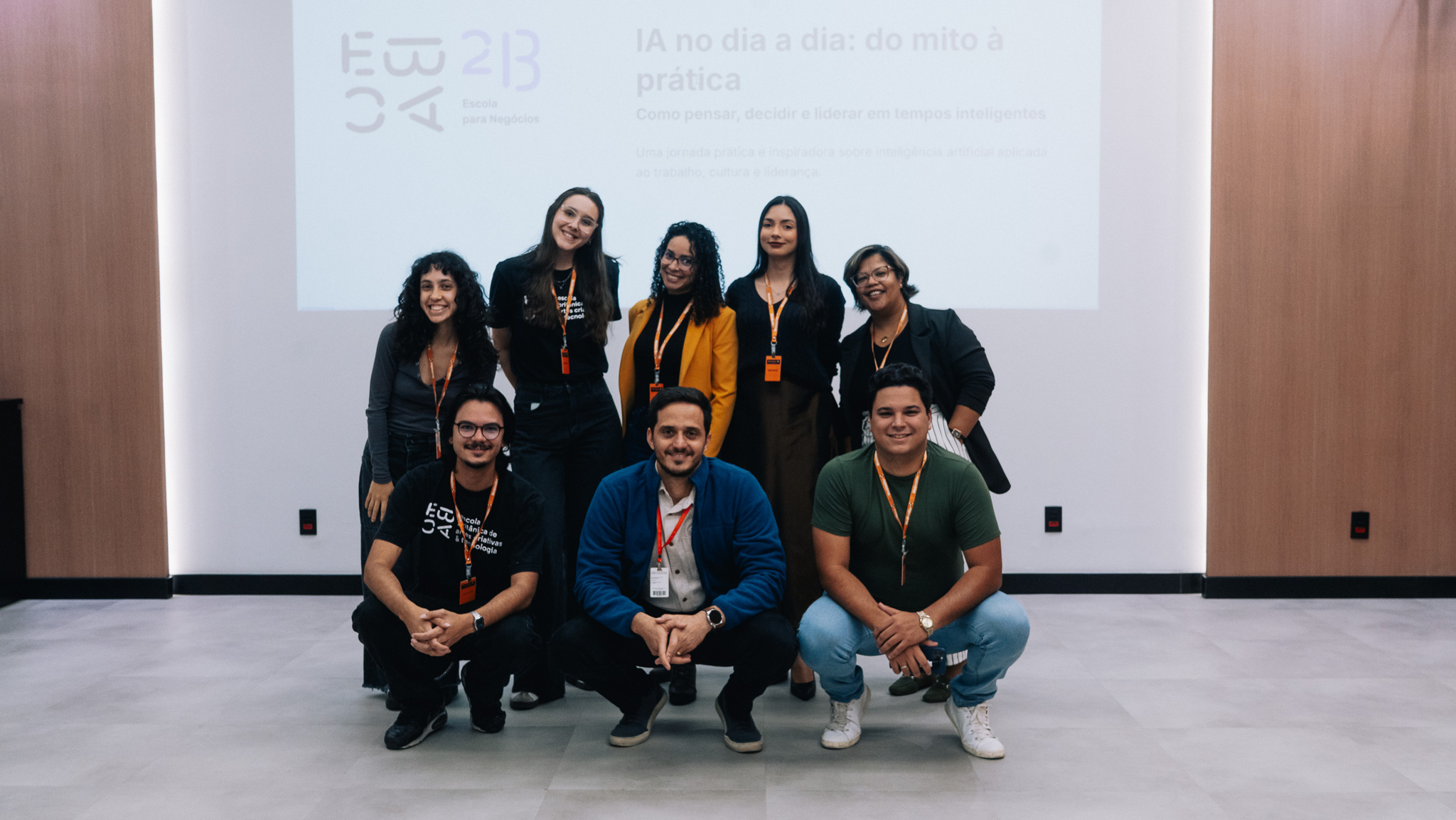 Applied cohorts
Learning oriented to real problems and projects.
 Lab
LabLab method with sanitized data.
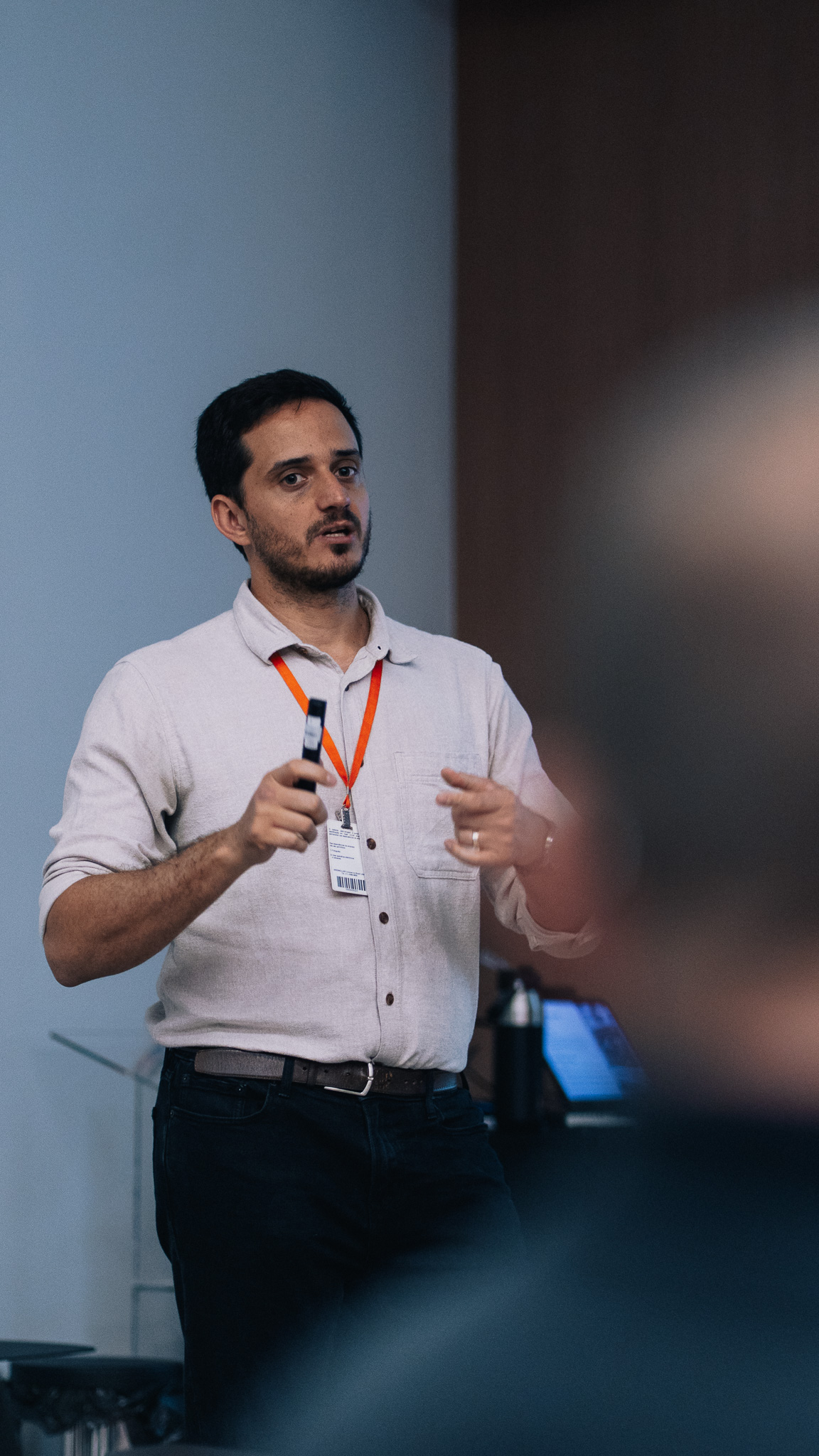 Applied governance
Structuring criteria, oversight, and control — from adoption to implementation.
Curriculum Structure
8 weeks with practical deliverables applied to the vertical context.
Required core
- Problem, users, and baseline
- AI fluency, critical thinking, and harness
- Evidence, sources, and data
- Evaluation, security, and Human in Control
- Implementation and capability transfer
Adaptive practices
- Automation
- Reports and dashboards
- Agents
- Research and retrieval (RAG)
- Public notices and funding
- Procurement and contracts
- Service design and redesign
- Policy and program monitoring
- Document analysis
- Data and decision support
The problem defines the journey — not a closed technology script. The 8 weeks combine a required core with practices the problem may pull in.
The final solution does not have to be an agent. It can be an automation, dashboard, assistant, workflow, prototype, technical specification, project for a public notice, service blueprint, or monitoring system — the format follows from the problem.
Week 1
Public Problem Definition
Frame the real problem, the success criterion, and the baseline — defining the scope of the integrating project.
Topics
- •Problem framing in the public sector
- •Success criteria and measurable baseline
- •Risks, constraints, and stakeholders
Lab
Problem brief for your agency
Validation criteria
- Real and delimited problem
- Measurable success criterion
Week 2
AI Work Harness
Set up the AI work environment and the basic harness to start producing with human oversight.
Topics
- •AI work environment and harness
- •Structured prompting and human review
- •Result logging and traceability
Lab
Initial harness applied to the problem
Validation criteria
- Reproducible flow
- Explicit human oversight
Week 3
Research & Source-Grounded Knowledge
Build research flows anchored in verifiable sources — when the problem demands it — avoiding hallucination in government materials.
Topics
- •Grounded knowledge and verifiable sources
- •Research and synthesis workflow
- •Citations and traceability
Lab
Grounded research on the problem
Validation criteria
- Verifiable sources
- No unsourced claims
Week 4
Data, Reporting & Decision Support
Turn data into reports and dashboards that support evidence-based decisions — as the problem demands, not as a mandatory step.
Topics
- •Data consolidation and analysis
- •Decision reports and dashboards
- •Evidence-based narrative
Lab
Decision-support report
Validation criteria
- Sanitized data
- Evidence-supported conclusions
Week 5
Automation, Agents, or Workflow Redesign
Choose the practice the problem demands — automation, an agent pilot, or workflow redesign — with an audit trail and mandatory human review.
Topics
- •Administrative routine automation
- •Agents with guardrails and audit trail
- •Limits and human control points
Lab
Pilot of the chosen practice
Validation criteria
- Audit trail
- Human control point
Week 6
Building the Solution for the Problem
Consolidate everything into a solution coherent with the problem — artifact, workflow, prototype, or specification — ready for evaluation.
Topics
- •Integrating project consolidation
- •Quality, robustness, and error handling
- •Solution packaging
Lab
Final problem solution
Validation criteria
- Solves the declared problem
- Documented and reproducible
Week 7
Evaluation, Security & Human in Control
Evaluate the solution with a focus on security, ethics, bias, and human control before implementation.
Topics
- •Quality and robustness evaluation
- •Security, privacy, and bias
- •Human control and accountability
Lab
Formal solution evaluation
Validation criteria
- Identified risks
- Documented controls
Week 8
Reusable Assets & 30-60-90 Plan
Turn the project into reusable assets and design the institutional implementation plan.
Topics
- •Reusable assets and documentation
- •30-60-90 implementation plan
- •Leadership presentation
Lab
30-60-90 plan
Validation criteria
- Clear implementation path
- Reusable assets
Expected Outcomes
- Take a real agency problem to a tested, implementable solution
- Learn what the problem demands — not a generic tool curriculum
- Build harnesses, flows, and agents with human oversight
- Produce evidence and a grounded decision report
- Sanitize sensitive data and operate securely by default
- Leave with reusable assets and a 30-60-90 roadmap
Use Cases
- Triage and classification of requests and documents
- Summarization of processes, contracts, and public notices
- Support for drafting opinions and minutes
- Data analysis and consolidation for decision-making
- Automation of administrative and service routines
- Agent pilots with audit trail
Deliverables
Individual
- •Real problem brief and baseline
- •Technical notes grounded in verifiable sources
- •Automations and agents with audit trail
Squad/Team
- •Cumulative integrating project across the 8 weeks
- •Decision-support reports and dashboards
- •Evaluation report with risks and controls
Institution
- •Problem-specific artifact, ready for use
- •Reusable assets and documentation
- •30-60-90 implementation roadmap
Stack and Tools
Core (Required)
- Generative AI tools with human oversight
- Spreadsheets and structured data tools
- Cloud work environment
Optional
- ○Python for automation and analysis
- ○Data visualization tools
- ○Agent orchestration
Labs
- Synthetic or sanitized data
- Ready-to-use templates and harnesses
- Dashboards and example artifacts
Differentiators vs Generic Training
HIC
- •Starts from the real problem — never from the tool
- •One problem as an 8-week cumulative project
- •Human control and evidence at every stage
- •Sensitive data always sanitized
- •Specialist mentorship by theme
- •Leaves with reusable assets and a 30-60-90 roadmap
Generic
- •Generic technical focus
- •Professional judgment not addressed
- •No evidence or controls
- •Generic or missing labs
- •Depend on paid licenses
- •No impact measurement
Request a conversation about HIC Government
Fill out the form below and our team will contact you.
Corporate cohorts
Talk to our team about in-company implementation and dedicated cohorts.
Frequently Asked Questions
Do I need prior AI experience to participate?
Is the program only for people who work in government?
How does the real-problem project work?
Can I use sensitive data from my institution?
Does the program include certification?
Do I need a team or can I do it individually?
What is the duration and workload?
Is HIC Government the same as the Government Relations course?
Still have questions? Talk to our team.
Chat on WhatsAppImportant
- •Educational program. It does not replace legal, procurement, or information security advice.
- •Sensitive data must be sanitized or replaced with synthetic data before use.
- •AI-supported decisions remain under human responsibility.
- •Invited specialists may vary by cohort.
Ready to become an HIC?
Contact us to discuss how this program can transform your career and your organization's capabilities.